
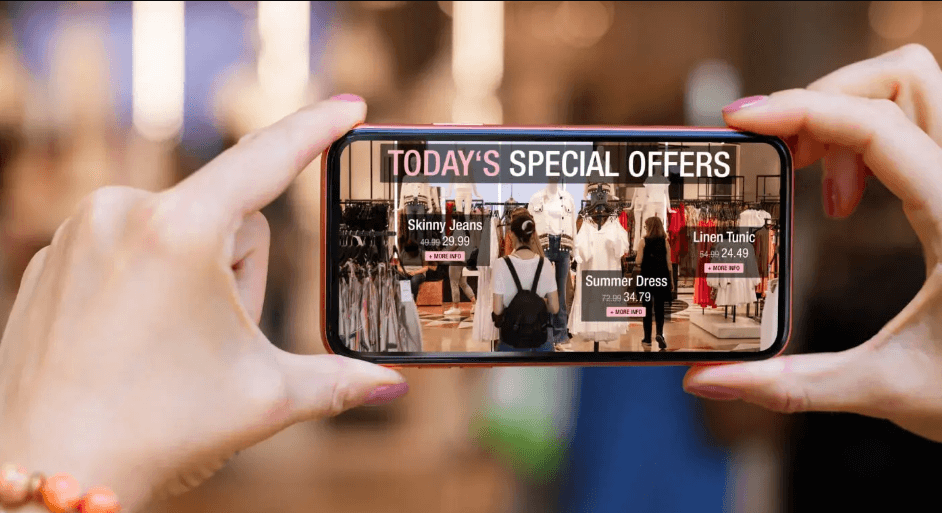
The Impact of Augmented Reality on Retail Shopping

Augmented Reality (AR) is reshaping the retail landscape by enhancing customer engagement through interactive experiences. By allowing consumers to visualize products in real-time, AR reduces uncertainty and fosters emotional connections with brands. As this technology evolves, retailers must adapt to the changing dynamics of consumer behavior and expectations. The implications of AR on purchasing decisions and brand loyalty are profound, prompting a closer examination of its role in the future of retail.
Enhancing Customer Engagement Through Interactive Experiences
How can augmented reality (AR) transform the retail shopping experience?
By creating immersive experiences and interactive displays, AR captivates consumers, enhancing their engagement. Research indicates that brands employing AR can increase customer interaction by up to 70%.
This technology not only captivates attention but also fosters deeper emotional connections, ultimately driving brand loyalty and encouraging consumers to spend more time in-store or online.
Virtual Try-Ons: Changing the Way Consumers Shop
Frequently, virtual try-ons are revolutionizing the retail landscape by allowing consumers to visualize products before making a purchase.
This technology enhances virtual fitting experiences, thereby influencing consumer behavior significantly.
Studies indicate that consumers are more likely to complete purchases after engaging with virtual try-ons, as they foster confidence and reduce uncertainty, ultimately transforming traditional shopping paradigms and empowering consumers with greater decision-making freedom.
See also: The Impact of AI on the Insurance Industry
Bridging the Gap Between Online and In-Store Shopping
As retailers increasingly adopt augmented reality (AR) technologies, they effectively bridge the gap between online and in-store shopping experiences.
By integrating online convenience with immersive in-store experiences, AR enhances consumer engagement and personalization.
Data indicates that shoppers are more likely to make purchases when they can visualize products in their intended environments, thus harmonizing the efficiencies of online shopping with the tactile benefits of physical retail.
The Future of Retail: Trends and Innovations in AR Technology
What innovations lie ahead for augmented reality (AR) in the retail sector?
Future trends indicate a surge in personalized shopping experiences through immersive displays, enabling consumers to visualize products in real-time.
Data suggests that AR can enhance customer engagement by 40%, fostering a deeper connection to brands.
As technology evolves, retailers will increasingly harness AR to redefine shopping experiences, driving sales and customer satisfaction.
Conclusion
In conclusion, augmented reality is revolutionizing retail shopping by enhancing customer engagement and fostering emotional connections with brands. For instance, IKEA’s AR app allows customers to visualize furniture in their own homes before purchase, significantly reducing return rates and increasing customer satisfaction. As AR technology continues to evolve, it not only bridges the gap between online and in-store experiences but also empowers consumers with enhanced decision-making capabilities, ultimately reshaping the retail landscape and driving sales growth.


